15 Renter-Friendly Apartment Upgrades That Make a Big Difference
Renting an apartment doesn’t mean you have to settle for a space that feels plain, outdated, or impersonal. Even if you can’t replace the kitchen cabinets, repaint every wall, or renovate the bathroom, there are plenty of ways to make your apartment feel more comfortable, stylish, and organized.
The trick is to focus on upgrades that don’t require major construction or permanent changes. Small improvements, such as adding better lighting, updating your curtains, introducing clever storage, or refreshing your bedroom textiles, can make a surprisingly big difference in how your home looks and feels.
Whether you’re living in a small studio, a one-bedroom apartment, or a rental with an outdated interior, you don’t need a huge budget to make it feel more like your own.
Here are 15 renter-friendly apartment upgrades worth considering, along with practical tips to help you choose the right solutions for your space.
1. Upgrade Your Lighting With Warm, Layered Light
One of the easiest ways to transform a rental apartment is to improve the lighting. Many apartments rely on a single overhead fixture in each room, which can make the space feel harsh, flat, or less inviting than you’d like.
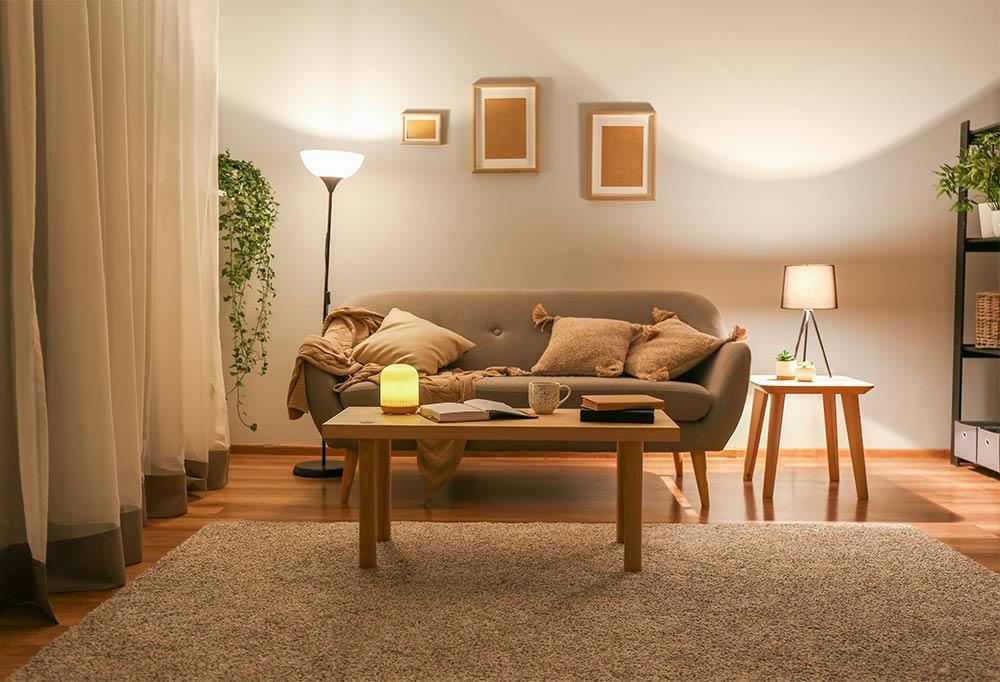
Instead of depending entirely on ceiling lights, try introducing several smaller light sources throughout the room.
Start with a floor lamp next to your sofa or reading chair. Add a table lamp to a side table, dresser, or bedside cabinet. If you have limited floor space, consider compact lamps that can sit on shelves or countertops.
Warm-white bulbs can also make a noticeable difference. For living rooms and bedrooms, a warm color temperature around 2700K–3000K generally creates a softer, more relaxing atmosphere than cool, bright lighting.
The goal is to create different lighting zones that serve different purposes. You might want brighter light near your desk or kitchen counter, while softer lighting works better around your sofa or bed.
A renter-friendly tip: Choose plug-in lighting rather than replacing hardwired fixtures. Plug-in wall lights, floor lamps, and table lamps can improve your lighting without requiring electrical modifications.
<escape>**</escape>What to consider: Check the condition and suitability of electrical outlets, avoid overloaded power strips, and keep cords away from walkways.
2. Add Removable Wallpaper or a Temporary Accent Wall
Plain walls can make a rental apartment feel unfinished, especially when the entire space is painted in the same neutral color.
An accent wall is a simple way to introduce personality without decorating every surface. Removable wallpaper can be one option, particularly if you want to add texture, a subtle pattern, or a little more visual interest.
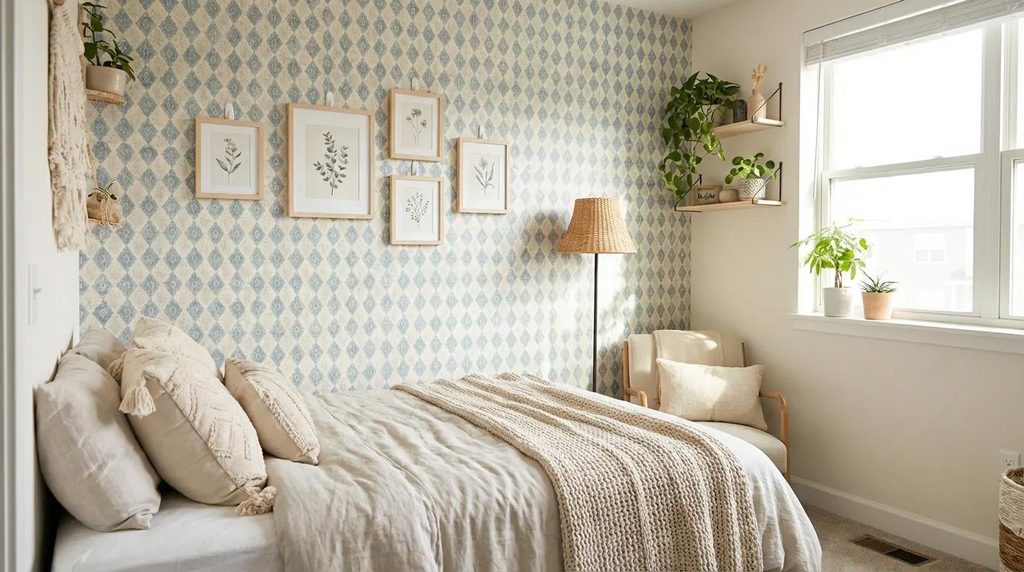
You could use a soft botanical print behind your bed, a neutral textured design in the living room, or a simple geometric pattern in a small dining area.
The key is to choose a design that complements the existing furniture and doesn’t overwhelm the room.
If you’re decorating a small apartment, lighter colors and subtle patterns can help maintain an open feeling. A bold pattern can also work beautifully on one carefully selected wall.
Before purchasing wallpaper, consider the surface you’re applying it to. Smooth, clean, properly finished walls are generally more suitable than textured, damaged, freshly painted, or peeling surfaces.
A renter-friendly tip: Test a small, inconspicuous area first and follow the manufacturer’s installation and removal instructions. Some removable wallpapers can still pull off paint or leave adhesive residue, so check your lease and get permission when necessary.
3. Replace Basic Cabinet Hardware
Sometimes the smallest details make the biggest visual difference. If your rental kitchen has plain or outdated cabinets, changing the handles can give the space a more updated appearance without replacing the cabinets themselves.
For example, simple black handles can create a clean, modern look, while brushed brass or warm metallic finishes can add a little elegance.
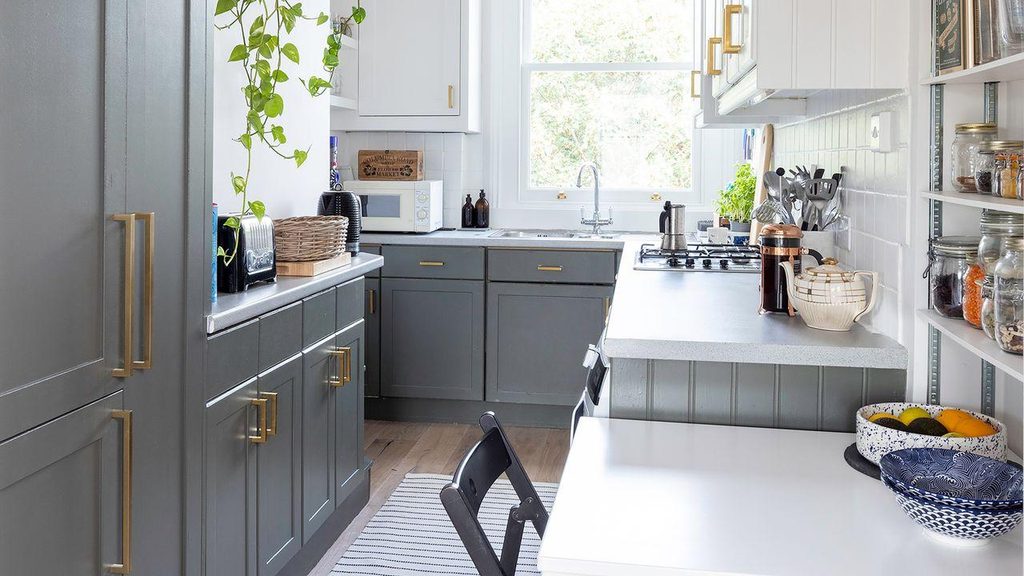
If your existing cabinets have standard handles, you may be able to find replacements that fit the same mounting holes.
Before buying anything, measure the distance between the existing screw holes. This is important because cabinet handles come in different sizes, and choosing the wrong dimensions could mean drilling new holes.
You can also use the same approach on bathroom cabinets, wardrobes, and other furniture with removable hardware.
A renter-friendly tip: Keep every original handle, screw, and fitting in a labeled bag or small container. When you move out, you can reinstall the original hardware and take your upgrades with you.
If your lease doesn’t allow hardware changes, consider decorative cabinet accessories or other non-permanent ways to refresh the space.
4. Upgrade Your Window Treatments
Curtains are often overlooked, but they can completely change the atmosphere of a room.
Basic blinds or short curtains may serve their purpose, but adding well-chosen window treatments can make a rental apartment feel more finished and comfortable.
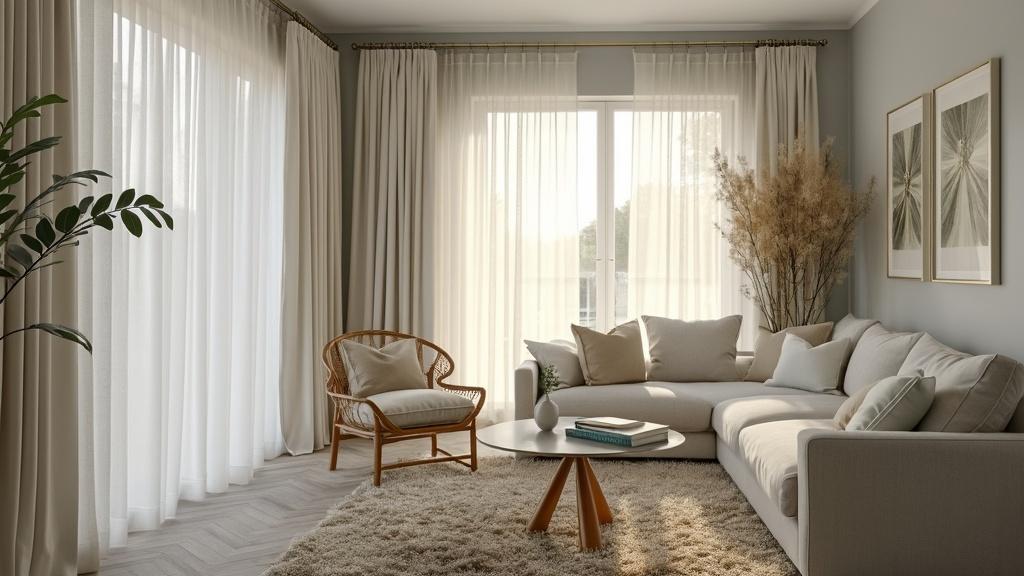
For a more spacious appearance, consider hanging curtains higher than the window frame where permitted. Longer curtains that reach close to the floor can create the impression of taller ceilings.
Fabric also matters. Light, breathable curtains can soften a room without blocking too much natural light, while thicker curtains may offer better privacy and help reduce unwanted light.
If your apartment has limited natural light, consider light-filtering fabrics in neutral shades such as cream, beige, or soft gray.
For bedrooms, you might prefer blackout curtains to make sleeping more comfortable.
A renter-friendly tip: Tension rods and other suitable no-drill curtain systems can be useful alternatives to drilling into walls. However, check the rod’s weight limits, window-frame suitability, and installation instructions before using one.
Choose window treatments that improve both the appearance and everyday functionality of your apartment.
5. Create a Better Entryway
Even if your apartment doesn’t have a separate entryway, you can create a small, organized area near the front door.
This is particularly useful in studio apartments and smaller rentals where shoes, bags, coats, and everyday belongings can quickly create clutter.
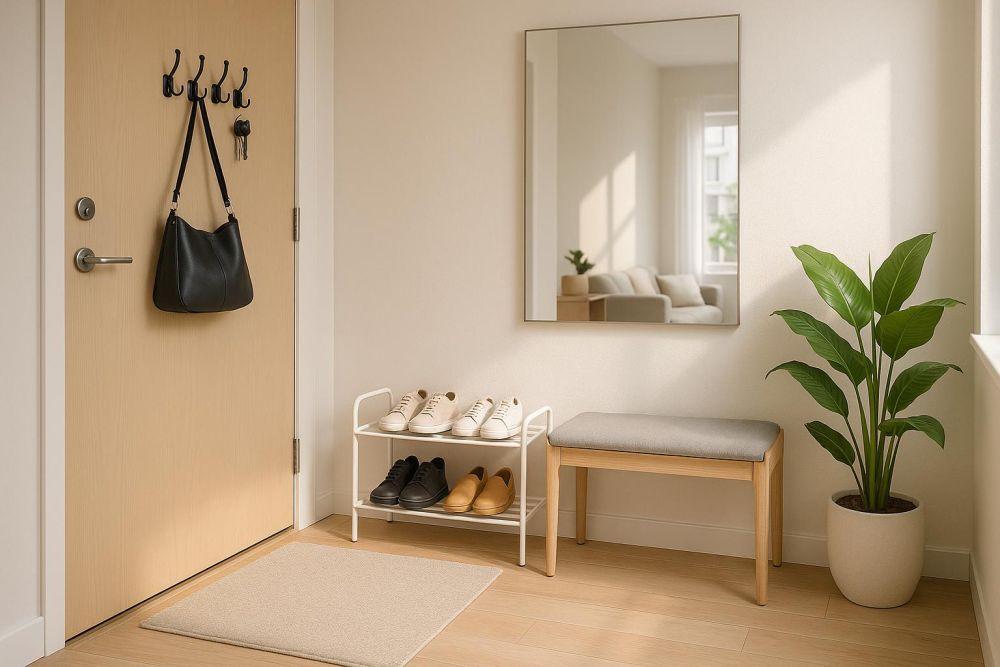
Start by choosing a slim shoe cabinet or compact storage bench that fits comfortably against the wall. A small piece of furniture can provide a dedicated place for shoes while keeping the entrance looking tidy.
A mirror is another useful addition. It gives you somewhere to check your appearance before leaving and can make a narrow entrance feel brighter.
You can also introduce a small tray for keys, sunglasses, and other everyday essentials. If you have enough space, a basket underneath a console table can hold bags or accessories.
For apartments without an entryway closet, freestanding coat racks can be a practical alternative.
A renter-friendly tip: Avoid installing hooks or shelves unless your lease permits them. Freestanding organizers and furniture are often simpler options, especially if you want to take everything with you when you move.
Keep the area around your front door clear so that shoes and furniture don’t interfere with safe access.
6. Add a Stylish Area Rug
An area rug is one of the easiest ways to make a rental apartment feel warmer and more personal.
It can soften hard flooring, introduce color and texture, and help define different areas within an open-plan space.
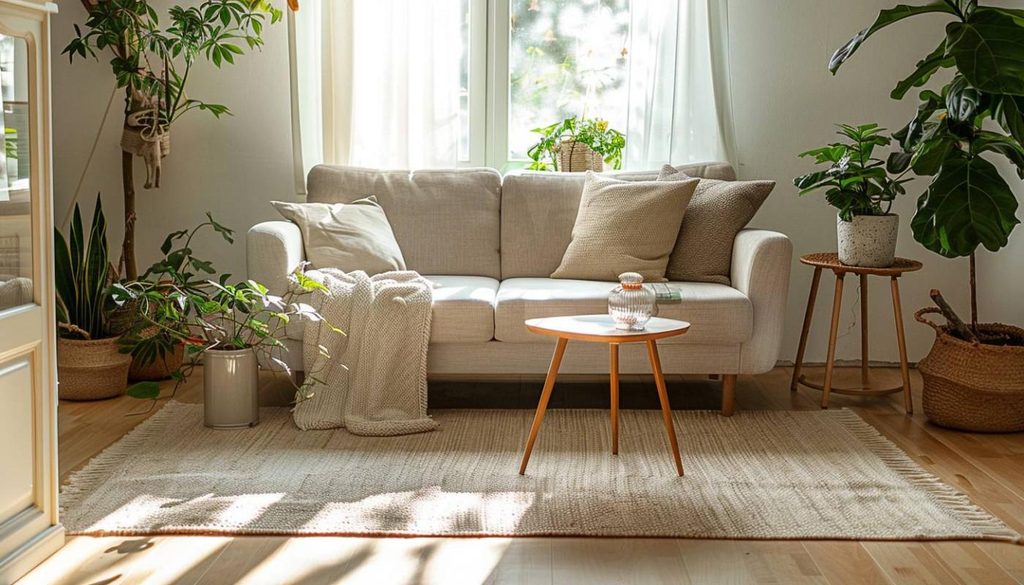
For example, in a studio apartment, you could place a rug underneath your sofa and coffee table to visually separate the living area from the sleeping space.
In a small living room, a larger rug that accommodates the front legs of your main furniture can make the arrangement feel more connected.
When choosing a rug, pay attention to its dimensions. A rug that’s too small may make the furniture arrangement look disconnected, while one that’s too large could overwhelm a compact room.
Neutral rugs are easy to coordinate with different furniture styles, but patterned rugs can also work well if the rest of the room is relatively simple.
A renter-friendly tip: Consider using a suitable rug pad to help prevent slipping and protect the flooring. Check that the pad is compatible with your floor material, since some types can discolor or damage certain finishes.
An area rug is also a useful way to add personality without changing anything permanent.
7. Bring Life Into Your Apartment With Plants
If your apartment feels a little cold or lifeless, adding plants can make it feel more welcoming.
Plants introduce natural color, texture, and visual interest, and they can work in almost any room when you choose varieties suited to the available conditions.
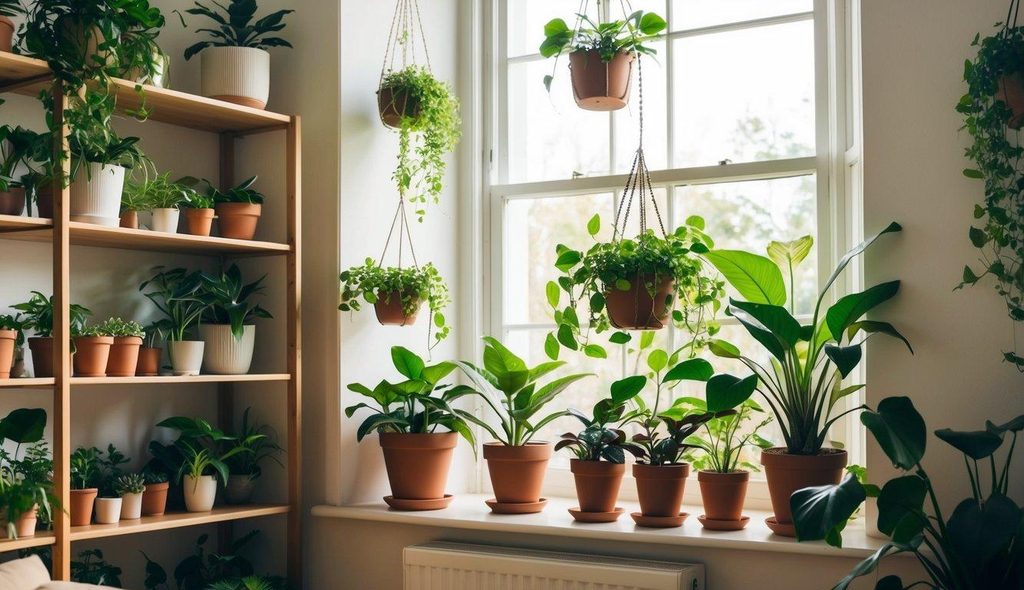
If you have a bright windowsill, you could use it for a few smaller plants. For apartments with limited floor space, consider compact plant stands, windowsill planters, or shelves that are already securely installed.
Some popular indoor plant options include:
- Snake plant: Often suitable for people who prefer relatively low-maintenance plants and can tolerate lower-light conditions, although brighter indirect light is also suitable.
- ZZ plant: A hardy option that generally needs relatively little watering.
- Pothos: A trailing plant that can look attractive on shelves or in hanging planters.
- Spider plant: A popular indoor plant that works well on shelves and windowsills.
- Succulents: Suitable for bright locations with plenty of natural light.
Remember that no plant thrives in every environment. Consider the amount of sunlight, humidity, temperature, and care required before choosing one.
A renter-friendly tip: Use attractive pots with drainage trays to protect floors, shelves, and windowsills from excess water. Also check whether any plants you choose are safe around pets.
You don’t need a large indoor garden. Even two or three carefully placed plants can make a noticeable difference.
8. Install Removable Backsplash Tiles
A plain kitchen backsplash can make an otherwise functional rental kitchen feel outdated.
If replacing the original tiles isn’t an option, removable backsplash products may offer a temporary alternative.
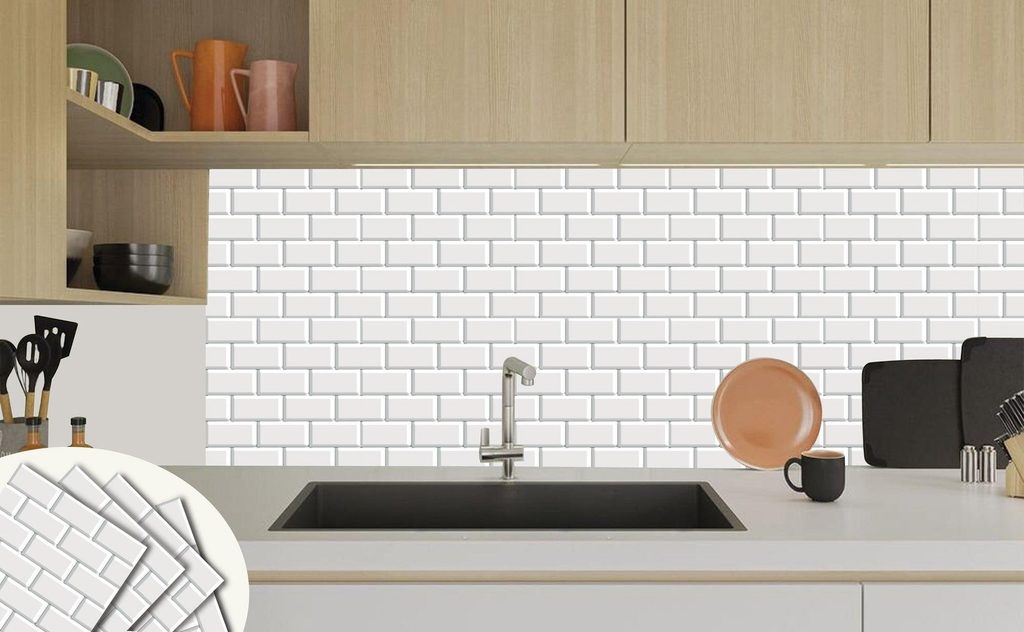
Peel-and-stick tiles come in different designs, including subway tile patterns, stone-inspired finishes, and simple geometric styles.
You can use them to introduce a little texture or create a cleaner, more coordinated appearance behind your kitchen counter.
For smaller kitchens, light-colored designs can help the space feel brighter, while subtle patterns can add character without making the room look too busy.
However, it’s important to choose the product carefully.
Not all removable backsplash products are suitable for every wall surface, and some may not be appropriate near stovetops, open flames, or high-heat areas.
A renter-friendly tip: Check the manufacturer’s instructions for surface compatibility, temperature limits, cleaning requirements, and removal methods. Test a small area if permitted and obtain landlord approval before installation when required.
If removable tiles aren’t suitable for your kitchen, you can still refresh the space with attractive countertop accessories, matching storage containers, and better organization.
9. Make Better Use of Vertical Space
When you’re living in a small apartment, floor space can become limited surprisingly quickly.
One of the most practical solutions is to use the vertical space you already have.
Instead of adding several small storage units around the room, consider taller furniture that uses the available height more efficiently.
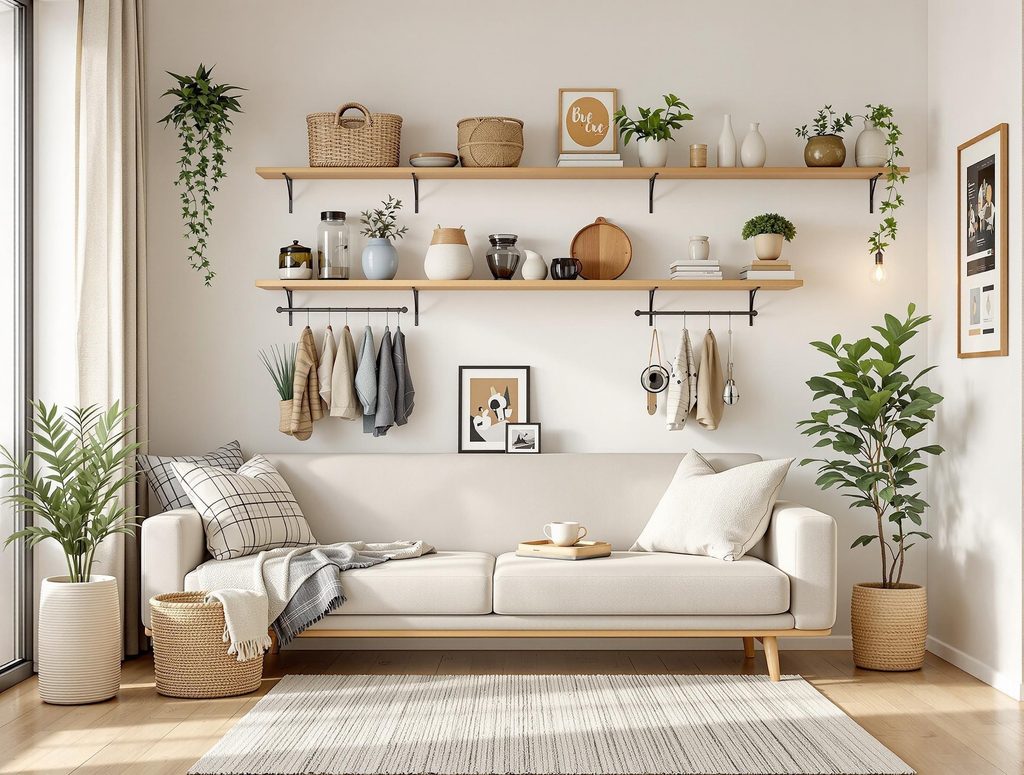
A narrow bookcase can provide storage for books, decorative objects, baskets, and everyday belongings without taking up as much floor space as a wide cabinet.
Freestanding shelving units can also work well in living rooms, bedrooms, kitchens, and entryways.
For smaller spaces, look for furniture that combines storage and display. For example, a tall shelving unit with baskets at the bottom can hide clutter while keeping frequently used items accessible.
You can also use vertical organizers inside wardrobes and cabinets to make better use of existing storage.
A renter-friendly tip: Choose stable, freestanding shelving where possible. Tall or heavy furniture should be secured against tipping using an appropriate method. If wall anchoring is necessary, check your lease and get permission before drilling.
The goal is to make use of unused space without overcrowding the room.
10. Refresh Your Bathroom Without Renovating
Bathrooms in rental apartments are not always the most attractive spaces. Sometimes the tiles are outdated, the storage is limited, or the overall appearance feels a little too basic.
Fortunately, you can improve the look of your bathroom with a few simple changes.
Start with the shower curtain. Replacing an old or plain curtain with a cleaner design can make the entire room feel more coordinated.
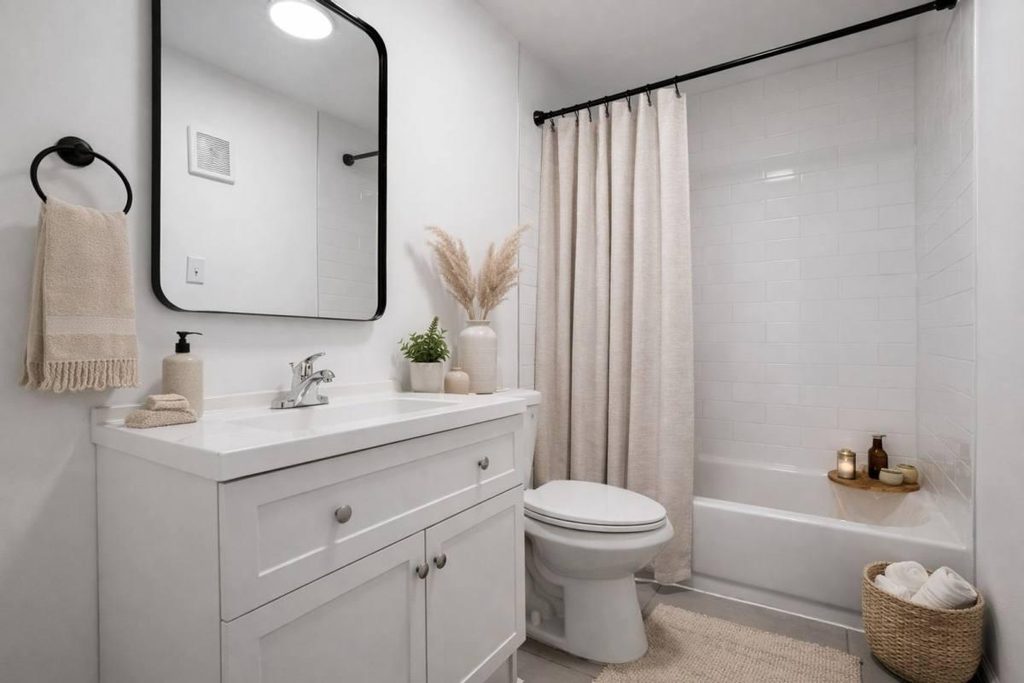
Next, consider updating your towels and bath accessories. Choosing a consistent color palette can make even a small bathroom look more thoughtfully decorated.
Freestanding storage is another practical improvement. A slim bathroom shelf, compact organizer, or small storage basket can help keep toiletries and everyday essentials organized.
If you have limited counter space, use a tray to group smaller items such as soap dispensers, skincare products, and toothbrush holders.
You can also add a small plant if the bathroom has suitable lighting and ventilation.
A renter-friendly tip: Avoid modifying plumbing or electrical fixtures. Choose accessories that can be removed easily, and make sure storage furniture is suitable for damp bathroom conditions.
A few coordinated details can make the bathroom feel much more comfortable without requiring a renovation.
11. Upgrade Your Kitchen With Better Organization
A kitchen doesn’t need expensive new cabinets or countertops to become more functional.
In many rental apartments, the biggest problem isn’t the amount of storage available but how that storage is being used.
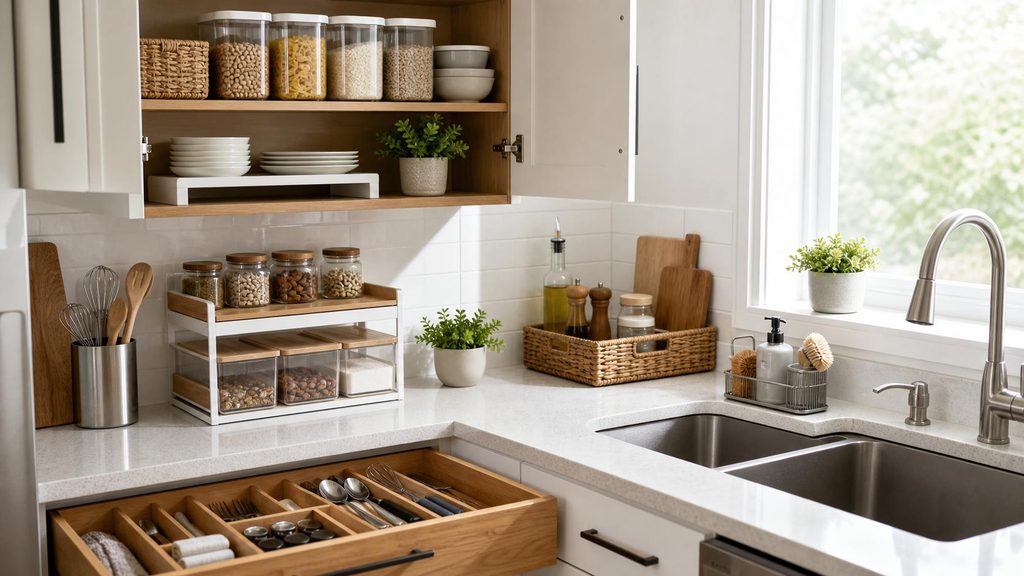
Start by looking inside your existing cabinets and drawers. You may discover that everyday items are difficult to reach because everything is stacked together.
Drawer dividers can help organize utensils, cooking tools, and small kitchen accessories.
Shelf risers can create additional levels inside cabinets, making it easier to store plates, mugs, and bowls.
Clear containers are useful for pantry staples such as pasta, rice, flour, and cereals, while small baskets can group similar items together.
On your countertop, try keeping only the things you regularly use. A compact tray can organize cooking oils and frequently used seasonings without making the surface feel cluttered.
A renter-friendly tip: Choose organizers that fit your existing cabinets rather than installing permanent storage systems. Measure the available space before purchasing anything to avoid buying products that don’t fit.
A well-organized kitchen can feel considerably larger and easier to use, even if the actual amount of storage hasn’t changed.
12. Add Mirrors to Make Rooms Feel Brighter
Mirrors are useful decorative pieces that can also help a small apartment feel brighter and more open.
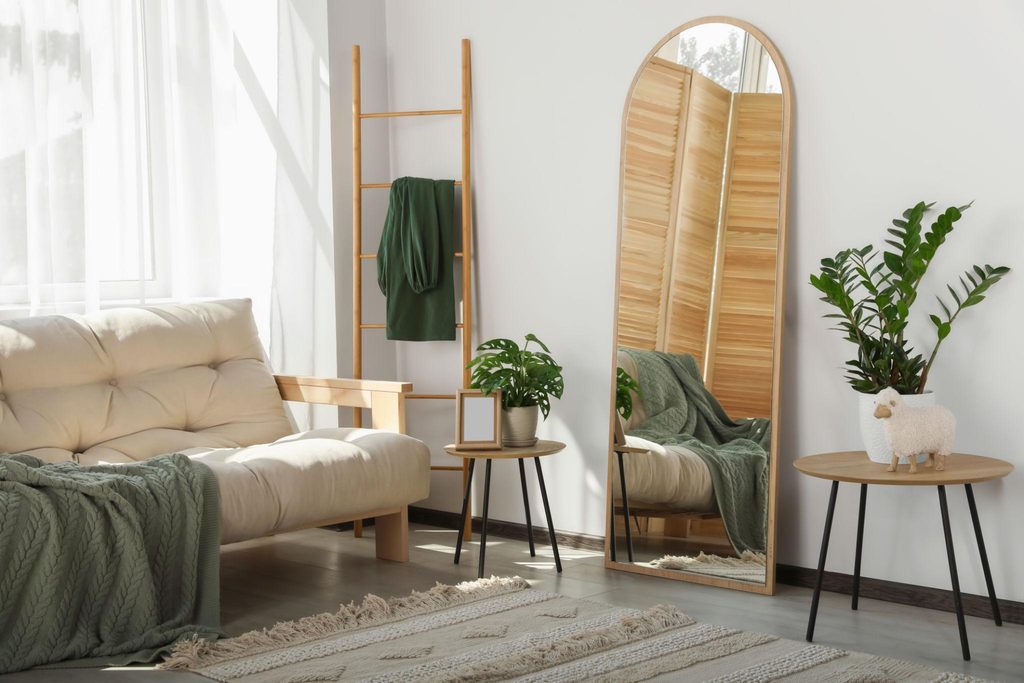
When placed thoughtfully, a mirror can reflect natural light and create the impression of additional space.
A full-length mirror leaning against a suitable wall can work particularly well in a bedroom or entryway.
For smaller rooms, a decorative mirror above a console table or dresser can become an attractive focal point.
If possible, position a mirror where it reflects a window or another bright area of the room. This can help distribute existing natural light throughout the space.
You don’t need several large mirrors. One well-positioned mirror may be enough to improve the overall appearance.
A renter-friendly tip: Freestanding and leaning mirrors can avoid the need for drilling, but they must be stable and positioned safely. Heavy mirrors should be secured appropriately, particularly in homes with children or pets. Check your lease before installing wall-mounted mirrors.
Besides being practical, mirrors can also help tie together the overall decorating style of your apartment.
13. Update Your Bedroom With Simple Textile Changes
Your bedroom should feel comfortable and relaxing, but rental bedrooms don’t always have the most appealing furniture or finishes.
One of the easiest ways to improve the space is to focus on textiles.
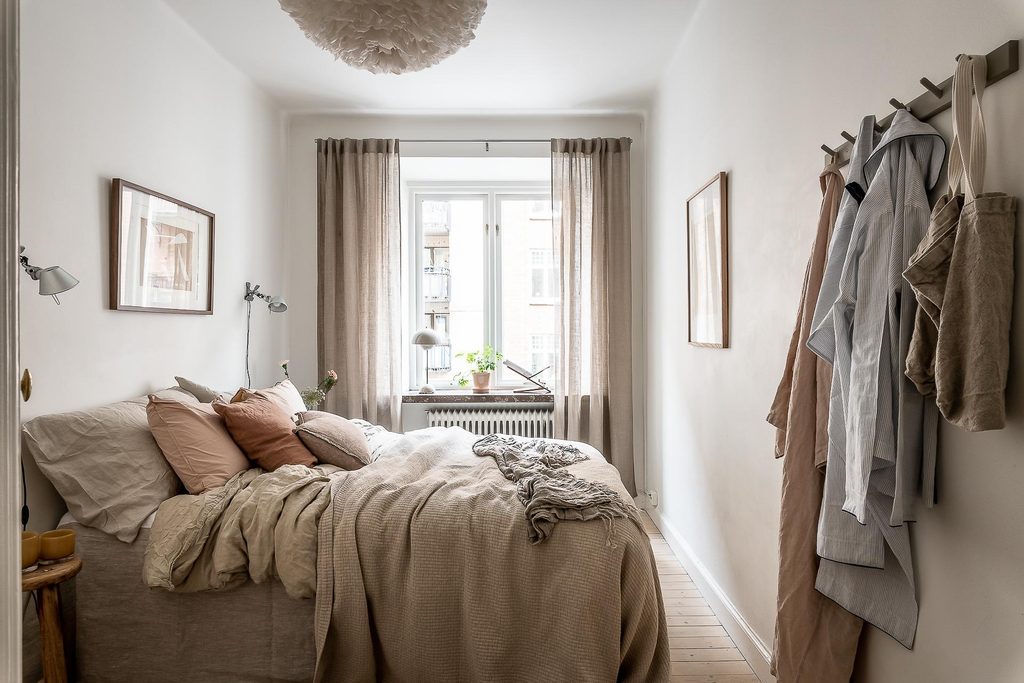
Start with your bedding. A coordinated duvet cover, matching pillowcases, and a few decorative cushions can make the bed feel more inviting.
You don’t need an expensive bedding set. Even simple neutral bedding can look beautiful when combined with different textures.
Consider adding a soft throw blanket at the end of the bed. It introduces another layer of texture and can make the room feel more finished.
If the bedroom has hard flooring, a small bedside rug can also make the space feel warmer.
For a cohesive appearance, choose two or three main colors and repeat them throughout the room.
For example, cream bedding, beige cushions, and a muted brown throw can create a warm and relaxed atmosphere.
A renter-friendly tip: Focus on items you can easily take with you when you move. Bedding, pillow covers, rugs, and blankets are relatively simple ways to personalize a rental without changing the original furniture.
Small textile changes can make your bedroom feel like a completely different space.
14. Add Privacy With Creative Room Dividers
If you’re living in a studio apartment or an open-plan rental, creating separate areas can make everyday life more comfortable.
Having your bed, sofa, dining table, and workspace all in one room can sometimes make the apartment feel less organized.
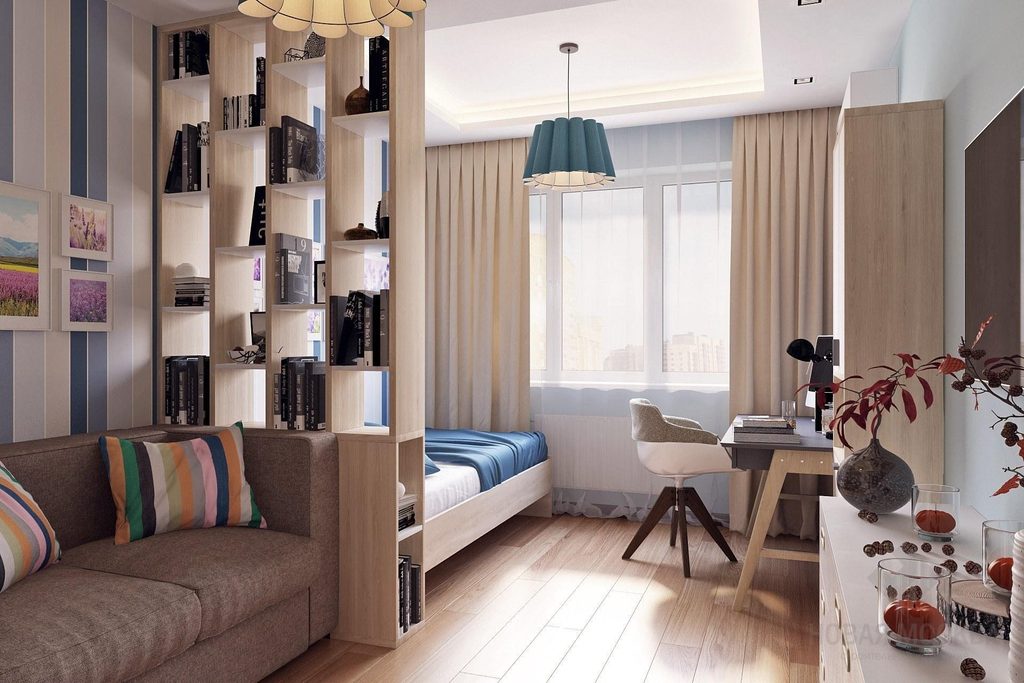
A room divider can help create a sense of separation without building a permanent wall.
One option is an open shelving unit. It can visually separate your sleeping area from the living space while providing additional storage.
Freestanding folding screens are another practical choice, especially if you want something that can be moved whenever necessary.
Curtains can also work as room dividers when used with a suitable freestanding or approved tension-based system.
When choosing a divider, think about how it affects natural light and movement around the room.
An open shelf may be better than a solid screen if you want to maintain a bright, airy feeling.
A renter-friendly tip: Choose stable dividers that don’t require permanent installation. Avoid placing heavy or unstable furniture where it could block exits, restrict walkways, or create a tipping hazard.
The best room divider is one that creates a little more privacy while keeping the apartment functional.
15. Personalize Your Walls With Removable Decor
Empty walls can make an apartment feel unfinished, but decorating them doesn’t always require painting or drilling.
There are several ways to introduce personality and make your walls feel more interesting.
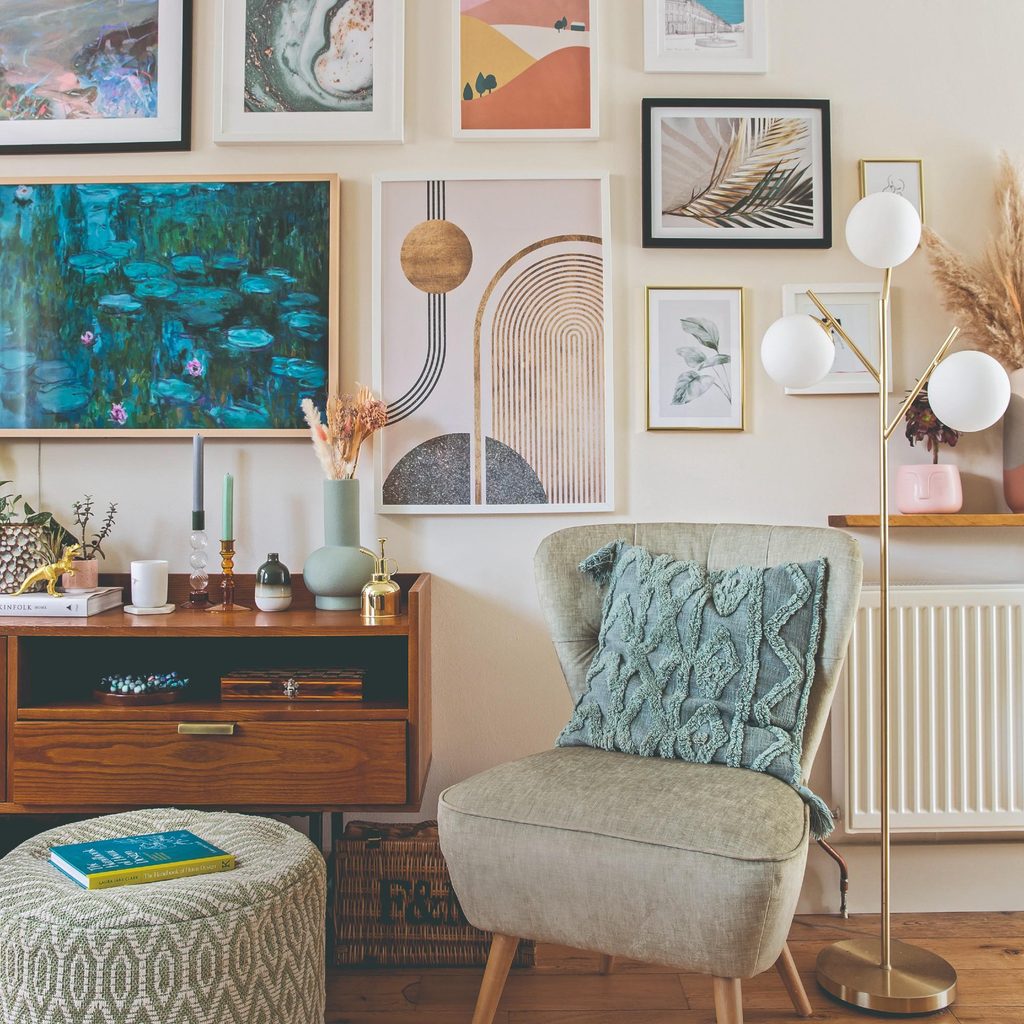
One popular option is a gallery wall. You can combine framed photographs, artwork, illustrations, and prints to create a display that reflects your style.
For a more cohesive look, choose frames in similar colors or artwork that shares a consistent color palette.
If you prefer a simpler appearance, one larger piece of artwork can make a strong visual statement without making the wall feel crowded.
Another option is to lean framed artwork against a wall on a dresser, shelf, or console table.
This works particularly well if you want to avoid installing anything directly onto the wall.
A renter-friendly tip: Adhesive picture-hanging products can be useful, but they aren’t guaranteed to be damage-free. Their suitability depends on the wall surface, paint condition, frame weight, and manufacturer’s instructions. Test carefully where permitted, and consider leaning artwork instead if you’re concerned about damaging the walls.
The most important thing is to choose decorations that make the apartment feel personal rather than simply filling every empty space.
How to Choose the Right Upgrades for Your Rental
With so many possibilities, it can be tempting to try everything at once. However, you don’t need to upgrade every room to make your apartment feel better.
A smarter approach is to start with the areas that cause the most frustration in your everyday life.
Start with your biggest problem.
If your apartment feels dark, prioritize lighting and window treatments. If you’re constantly struggling with clutter, focus on storage and organization. If the space feels cold or impersonal, introduce rugs, plants, textiles, and artwork.
Set a realistic budget.
You don’t need to spend a lot of money to improve a rental. Small purchases such as lampshades, cushion covers, storage baskets, and drawer organizers can make a noticeable difference.
Decide how much you’re comfortable spending before shopping, and prioritize upgrades that provide practical value as well as visual appeal.
Choose upgrades you can take with you.
Whenever possible, look for furniture, lighting, rugs, textiles, and decorative accessories that can move with you to your next home.
This is especially worthwhile if you expect to move within the next few years.
Think about everyday functionality.
A beautiful apartment is great, but it should also work for your lifestyle.
Before buying something, consider whether it solves a real problem, improves comfort, or simply adds another object that needs to be stored.
Consider the cost of removing an upgrade.
Some temporary decorating products require careful installation and removal. Before using them, consider whether the potential improvement is worth the cost and effort of restoring the original surface.
What to Check Before Making Changes to a Rental Apartment
Even if an upgrade is marketed as renter-friendly, it doesn’t automatically mean that your landlord will allow it.
Rental agreements differ, and certain changes may require written permission.
Before starting a project, keep these points in mind:
- Read your lease: Check the rules regarding painting, drilling, wall coverings, fixtures, and other modifications.
- Ask for permission when necessary: If you’re unsure whether an upgrade is allowed, contact your landlord or property manager and keep written confirmation.
- Test removable products carefully: Adhesives, wallpaper, and mounting strips can damage paint, plaster, or other finishes.
- Avoid electrical and plumbing modifications: Don’t attempt to change wiring, outlets, plumbing fixtures, or other building systems without appropriate permission and qualified assistance.
- Follow manufacturer instructions: Pay attention to weight limits, surface compatibility, temperature restrictions, and installation requirements.
- Keep original fixtures and hardware: Store anything you replace so that you can restore the apartment when moving out, if required.
- Document the original condition: Take photographs before making changes, particularly in areas where you plan to install removable products.
A little preparation can help you avoid unnecessary repair costs and make moving out much easier.
Final Thoughts
Making a rental apartment feel like home doesn’t require a complete renovation or a huge decorating budget.
Sometimes, the most noticeable improvements come from small changes: warmer lighting, better storage, comfortable textiles, a few plants, or a more organized entryway.
The best part is that many of these upgrades can move with you when you eventually find your next home.
You don’t have to tackle all 15 ideas at once. Start with one room or one everyday problem and choose an upgrade that makes your space more comfortable, functional, or enjoyable.
After all, your apartment should feel like home, even if you don’t own it.
At ApartmentCraft, we believe every inch deserves a little creativity.